Buy tingg.eu ?
We are moving the project
tingg.eu .
Are you interested in purchasing the domain
tingg.eu ?
domain@kv-gmbh.de · 0541-91531010
Buy tingg.eu ?
Why is there no negative sodium ion?
Sodium is a metal and has a single electron in its outer shell. When it forms an ion, it loses this electron to achieve a stable electron configuration, resulting in a positive charge. Since sodium readily loses its electron to form a positive ion, there is no naturally occurring negative sodium ion. **
What is an acid residue ion, an oxonium ion, and a hydronium ion?
An acid residue ion is a fragment of a molecule that remains after a hydrogen ion is removed from an acid. An oxonium ion is a positively charged ion formed by the addition of a proton to an oxygen atom. A hydronium ion is a positively charged ion formed by the combination of a water molecule with an extra proton, commonly found in aqueous solutions of acids. **

Similar search terms for AeroGlow-Negative-Ion-Hair
Top-Angebote
Products related to AeroGlow-Negative-Ion-Hair:
-
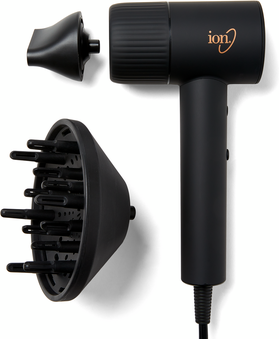
Ion Ionic Conditioning Hair DryerThis hair dryer emits millions of natural negative ions that break down water droplets, letting you dry your hair faster with less damage. Far-infrared heat allows hair to dry from the inside out, helping it retain its natural moisture. The cuticle...74,99 $*Shipping: 0,00 $Secure redirect to the provider
-
Ion ion 24K Rapid Recovery Peptide Leave-In Hair TreatmentIon® 24K Rapid Recovery Peptide Leave-In Hair Treatment is a lightweight, fast-absorbing leave-in designed to reverse damage from root to tip. Powered by amino peptides for strong hair, this scientifically advanced formula helps maintain nearly 69%...28,99 $*Shipping: 0,00 $Secure redirect to the provider


-
Does the iodide ion have a negative charge or does it want to donate electrons?
The iodide ion has a negative charge because it has gained an extra electron, giving it a full outer electron shell and making it stable. As a result, the iodide ion is not looking to donate electrons but rather to maintain its stable electron configuration by holding onto the extra electron it has acquired. **
-
What are the oxonium ion and the hydroxide ion?
The oxonium ion is a positively charged ion formed when a water molecule gains a hydrogen ion, resulting in the formula H3O+. This ion is commonly found in acidic solutions. On the other hand, the hydroxide ion is a negatively charged ion formed when a water molecule loses a hydrogen ion, resulting in the formula OH-. This ion is commonly found in basic solutions. Both ions play important roles in acid-base chemistry. **
-
What is an oxonium ion and a hydroxide ion?
An oxonium ion is a positively charged ion formed by the combination of a water molecule and a hydrogen ion (H+). It is also known as a hydronium ion and is commonly found in acidic solutions. A hydroxide ion, on the other hand, is a negatively charged ion composed of one oxygen and one hydrogen atom (OH-). It is a key component of basic solutions and is responsible for the alkaline properties of substances such as sodium hydroxide. Both oxonium and hydroxide ions play important roles in the pH and chemical properties of solutions. **
-
What is an ion?
An ion is an atom or molecule that has gained or lost one or more electrons, giving it a positive or negative charge. When an atom loses an electron, it becomes a positively charged ion called a cation. Conversely, when an atom gains an electron, it becomes a negatively charged ion called an anion. Ions play a crucial role in chemical reactions and are essential for various biological processes in living organisms. **

How are lattice energy, ion charge, ion radius, and melting temperature related?
Lattice energy is the energy required to separate an ionic solid into its constituent ions. It is directly related to the ion charges and inversely related to the ion radius. Higher ion charges and smaller ion radii result in higher lattice energies. As lattice energy increases, so does the melting temperature of the ionic solid. This is because the stronger the ionic bonds (as indicated by higher lattice energy), the more energy is required to break those bonds, resulting in a higher melting temperature. **
What is the difference between the carbonate ion and the bicarbonate ion?
The main difference between the carbonate ion (CO3^2-) and the bicarbonate ion (HCO3^-) is the number of hydrogen atoms present. The carbonate ion has a charge of -2 and does not contain any hydrogen atoms, while the bicarbonate ion has a charge of -1 and contains one hydrogen atom. Bicarbonate is a conjugate base of carbonic acid, while carbonate is a polyatomic ion on its own. **
Top-Angebote
Products related to AeroGlow-Negative-Ion-Hair:
-
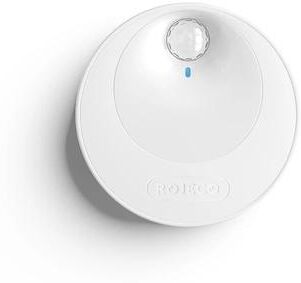
Inspire Select ROJECO Smart Cat Litter Deodorizer Automatic Odor Purifier With Negative Ion Technology For Litter Boxes whiteEnjoy a fresher, cleaner home environment with an intelligent odorcontrol solution designed specifically for cat owners. This advanced cat litter deodorizer helps neutralize unpleasant litter box odors automatically, creating a more comfortable...179,98 $*Shipping: 0,00 $Secure redirect to the provider
-
Ion Ionic Conditioning Hair DryerThis hair dryer emits millions of natural negative ions that break down water droplets, letting you dry your hair faster with less damage. Far-infrared heat allows hair to dry from the inside out, helping it retain its natural moisture. The cuticle...74,99 $*Shipping: 0,00 $Secure redirect to the provider
-
Why is there no negative sodium ion?
Sodium is a metal and has a single electron in its outer shell. When it forms an ion, it loses this electron to achieve a stable electron configuration, resulting in a positive charge. Since sodium readily loses its electron to form a positive ion, there is no naturally occurring negative sodium ion. **
-
What is an acid residue ion, an oxonium ion, and a hydronium ion?
An acid residue ion is a fragment of a molecule that remains after a hydrogen ion is removed from an acid. An oxonium ion is a positively charged ion formed by the addition of a proton to an oxygen atom. A hydronium ion is a positively charged ion formed by the combination of a water molecule with an extra proton, commonly found in aqueous solutions of acids. **
-
Does the iodide ion have a negative charge or does it want to donate electrons?
The iodide ion has a negative charge because it has gained an extra electron, giving it a full outer electron shell and making it stable. As a result, the iodide ion is not looking to donate electrons but rather to maintain its stable electron configuration by holding onto the extra electron it has acquired. **
-
What are the oxonium ion and the hydroxide ion?
The oxonium ion is a positively charged ion formed when a water molecule gains a hydrogen ion, resulting in the formula H3O+. This ion is commonly found in acidic solutions. On the other hand, the hydroxide ion is a negatively charged ion formed when a water molecule loses a hydrogen ion, resulting in the formula OH-. This ion is commonly found in basic solutions. Both ions play important roles in acid-base chemistry. **
Similar search terms for AeroGlow-Negative-Ion-Hair
-
Ion ion 24K Rapid Recovery Peptide Leave-In Hair TreatmentIon® 24K Rapid Recovery Peptide Leave-In Hair Treatment is a lightweight, fast-absorbing leave-in designed to reverse damage from root to tip. Powered by amino peptides for strong hair, this scientifically advanced formula helps maintain nearly 69%...28,99 $*Shipping: 0,00 $Secure redirect to the provider
-
Ion Titanium Gator Digital Flat IronThe ion Gator Titanium Digital Flat Iron is designed to straighten, curl or flip. The Gater Titanium digital flat iron, sleek in design and superior in function and quality, features titanium plating that is stable at ultra-high temperatures and is...74,99 $*Shipping: 0,00 $Secure redirect to the provider
-
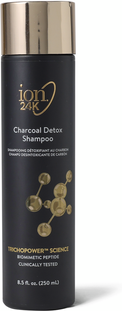
Ion ion 24K Charcoal Detox ShampooIon® 24K Charcoal Detox Shampoo is a powerful yet gentle charcoal shampoo designed to deeply cleanse hair and scalp, while repairing hair's keratin chain. This detox shampoo helps lift impurities, odors and buildup from styling products and...20,99 $*Shipping: 0,00 $Secure redirect to the provider
-
What is an oxonium ion and a hydroxide ion?
An oxonium ion is a positively charged ion formed by the combination of a water molecule and a hydrogen ion (H+). It is also known as a hydronium ion and is commonly found in acidic solutions. A hydroxide ion, on the other hand, is a negatively charged ion composed of one oxygen and one hydrogen atom (OH-). It is a key component of basic solutions and is responsible for the alkaline properties of substances such as sodium hydroxide. Both oxonium and hydroxide ions play important roles in the pH and chemical properties of solutions. **
-
What is an ion?
An ion is an atom or molecule that has gained or lost one or more electrons, giving it a positive or negative charge. When an atom loses an electron, it becomes a positively charged ion called a cation. Conversely, when an atom gains an electron, it becomes a negatively charged ion called an anion. Ions play a crucial role in chemical reactions and are essential for various biological processes in living organisms. **
-
How are lattice energy, ion charge, ion radius, and melting temperature related?
Lattice energy is the energy required to separate an ionic solid into its constituent ions. It is directly related to the ion charges and inversely related to the ion radius. Higher ion charges and smaller ion radii result in higher lattice energies. As lattice energy increases, so does the melting temperature of the ionic solid. This is because the stronger the ionic bonds (as indicated by higher lattice energy), the more energy is required to break those bonds, resulting in a higher melting temperature. **
-
What is the difference between the carbonate ion and the bicarbonate ion?
The main difference between the carbonate ion (CO3^2-) and the bicarbonate ion (HCO3^-) is the number of hydrogen atoms present. The carbonate ion has a charge of -2 and does not contain any hydrogen atoms, while the bicarbonate ion has a charge of -1 and contains one hydrogen atom. Bicarbonate is a conjugate base of carbonic acid, while carbonate is a polyatomic ion on its own. **
* All prices are inclusive of VAT and, if applicable, plus shipping costs. The offer information is based on the details provided by the respective shop and is updated through automated processes. Real-time updates do not occur, so deviations can occur in individual cases. ** Note: Parts of this content were created by AI.